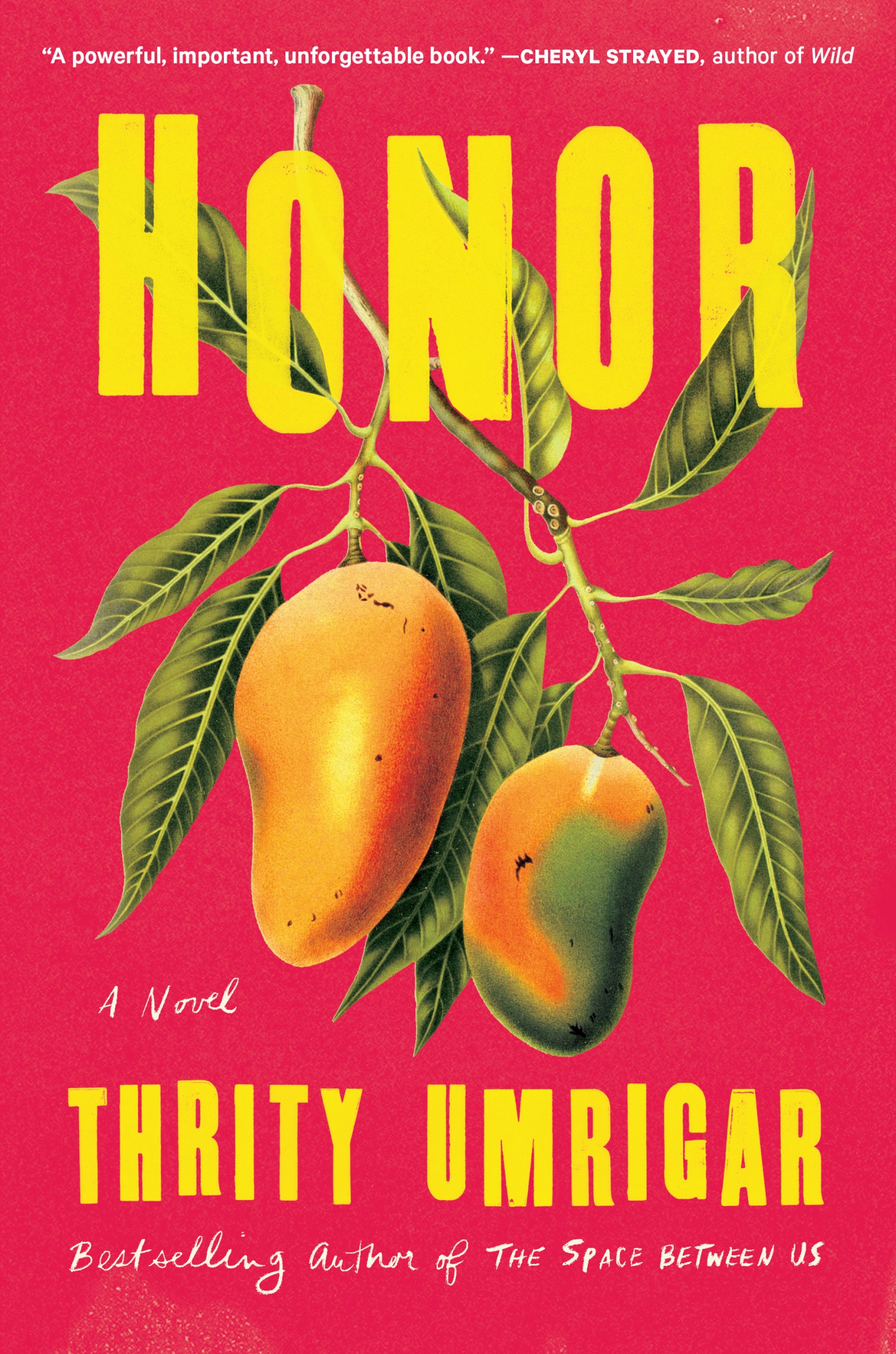
Honor (2022) by Thrity Umrigar can sometimes be difficult to read or listen to because of the subject matter, but it was so powerful, well-done, and important to not look away that I urge everyone to read it.
Smita, an Indian-American journalist who travels the world telling women’s stories, has come back to India at the request of her friend Shannon, who has broken her leg, Smita hasn’t been back to India since she left when she was 11 or 12 years old, and she thinks she is there to help Shannon recover. But no, Shannon needs Smita to cover the story of Meena, a Hindu woman who was attacked by her own brothers for marrying a Muslim man, who they also killed by burning alive. A lawyer has convinced the police to charge Meena’s brothers with murder, and Meena has agreed to testify, despite threats to both her and her child’s safety. Meena lives with her mother-in-law, who blames her for her son’s death.
Smita agrees to travel to Meena’s remote village and interview her, the brothers, and the village chief, to do a couple of stories as they wait for the verdict. Shannon’s friend Mohan agrees to accompany Smita–to drive her around and interpret for her, since Smita’s Hindi is very rusty. Mohan is in the tech industry, is an upper-class single man, and uses his vacation to help Shannon, Smita, and Meena. While traveling, Mohan and Smita let people think they are engaged or husband and wife, and that helps smooth their travels and let people talk to them–they would have spit in Smita’s face if she’d come alone.
Smita begins to really depend on Mohan, and as they wait for the verdict, Smita tells him the story she’s never told anyone else about how her family ended up in the United States and why she’s never been back to India since then. Meena’s horrifying story hits very close to home for Smita.
Umrigar has done such a good job with making us care for Meena and her lost love Abdul, and Smita and Mohan, and illuminating the needless hatred that ruins so many lives. Meena is so wise and good, and brave, and Smita gets there as well. I highly recommend Honor, even though there are difficult parts and it will make you very angry.
As far as anti-fat bias, the only mention of fat was when Meena’s mother-in-law insults her. It is jarring, and unfortunate that fat is an insult used around the world, even in a remote Indian village. But fatness is not a major part of the story, so I’d consider it weight-neutral except for a couple of instances of anti-fatness.
 Reading While Fat
One thought on “Honor”