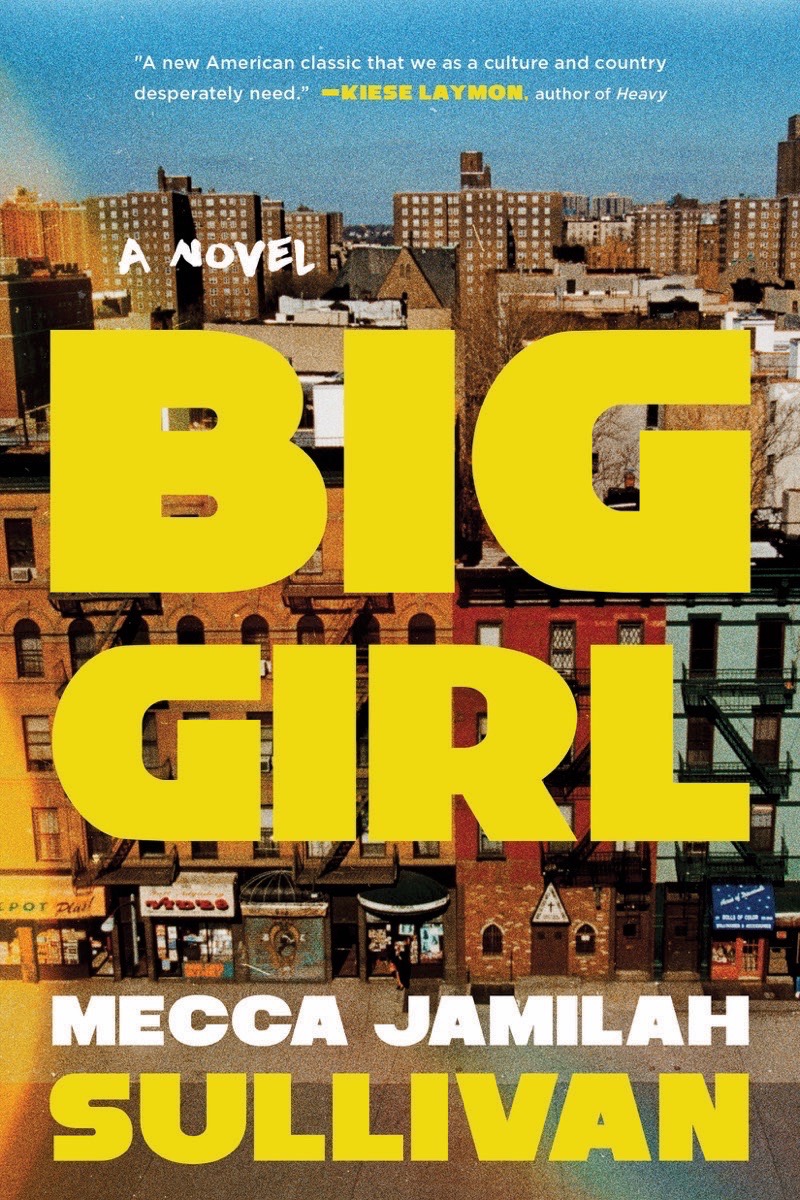
I have complicated feelings about Big Girl by Mecca Jamilah Sullivan (2022).
First, I am glad that a novel about the coming of age of a fat, black, young girl in 1990’s Harlem was written. The author did an amazing job with the story of Malaya and her family (her mother, Nyela, is a professor, and her father, Percy, works with computers) from the time she was about eight years old until she was in high school.
But the anti-fat bias that Malaya is subjected to is very difficult to read. I was in my 20s in the 1990s, I remember what it was like. But it was so much worse for a young black child who kept getting bigger and bigger as she grew up. Her grandmother blamed her mother for “not getting her under control” and her mother took her to Weight Watchers meetings, while her father bought her street food and best friend brought her convenience store treats.
As a teen, Malaya does find a group of friends–the few other black kids at her mostly-white prep school–but she also has to deal with nearly-insurmountable grief, and does so in not-so-healthy ways. Plus, her neighborhood is changing and gentrifying.
What I didn’t like:
- Malaya is a binge eater, eating forbidden foods in large quantities in secret. This is a harmful portrayal, perpetuating the stereotype that fat people are fat because we binge eat, and that if we didn’t do this behavior, we would not be fat.
- Malaya has no supportive adult in her life that loves her just as she is. Even her father, who reassures her that she is beautiful, stands with her mother as one when getting her an exercise bike for Christmas so she can work on her “weight problem”.
- Neither of her parents realize when she’s depressed and skips school for weeks and weeks after having been taken to a consult for weight loss surgery–I just don’t understand how both parents can be so oblivious.
- Although Malaya is still fat at the end of the book, her weight is trending down, because she’s not binging so much anymore. This is consistent with the trope of the “good fatty”–that it’s OK to be fat, as long as you’re trying to lose weight and otherwise performing diet culture. Although Malaya thinks “Losing weight was not the point,” her actions were louder than this thought.
All that being said, the writing is so, so well done, and, although it is a novel, it is true in the broadest sense of portraying what it is like to be a fat person in an anti-fat world. So I do recommend it, with the caveat to be aware of the significant anti-fat bias that is woven throughout in both subtle and obvious ways, and the stereotypes that are perpetuated.
 Reading While Fat