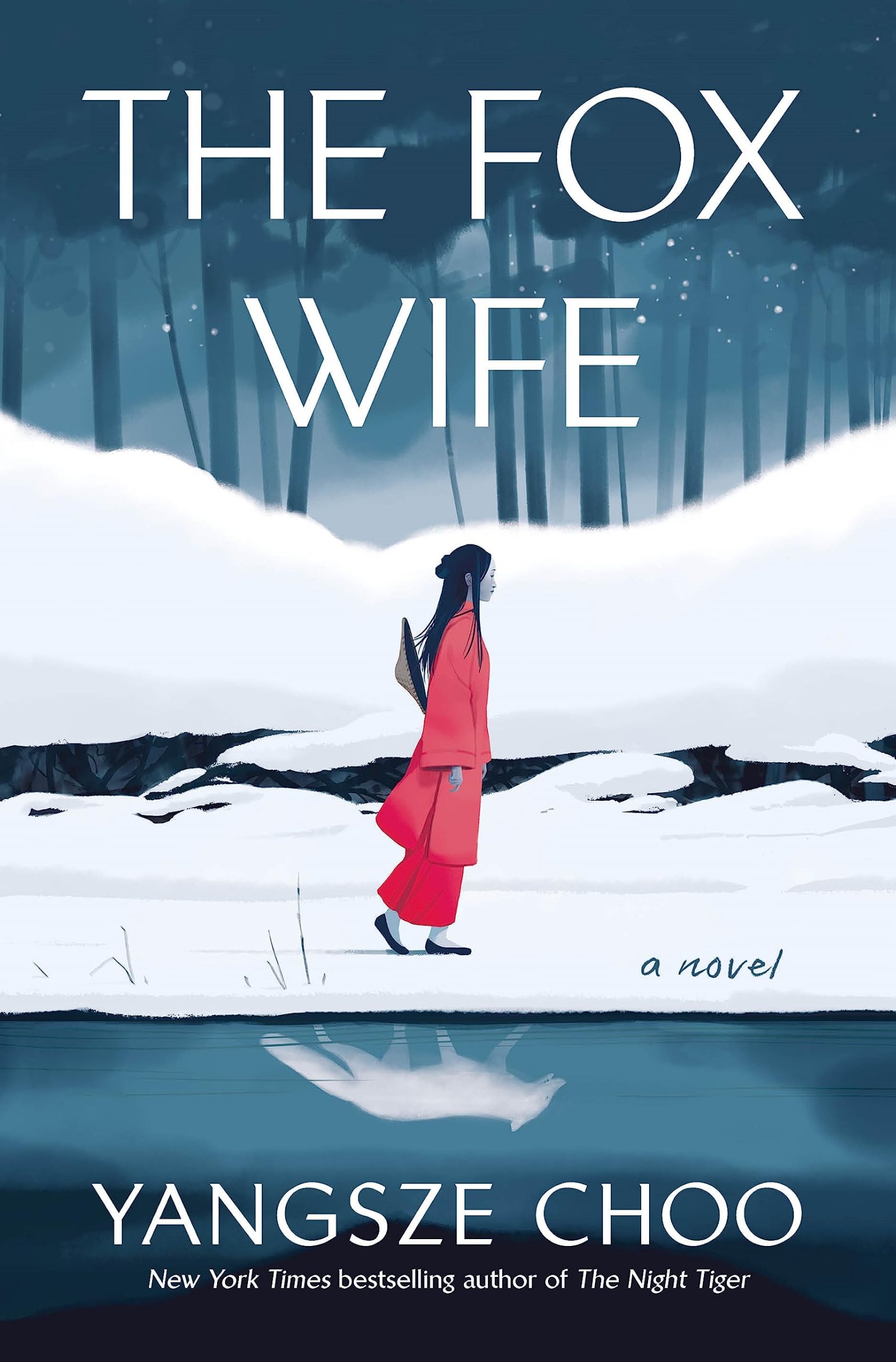
The Fox Wife (2024) by Yangsze Choo (The Ghost Bride, The Night Tiger) completely charmed me from the second page with these lines:
I exist as either a small canid with thick fur, pointed ears, neat black feet, or a young woman. Neither are safe forms in a world run by men.
Thus we meet Snow, who we find is on a quest to find the human who killed her child. She becomes a maid for the elderly grandmother in a family that runs a Chinese-medicine shop, in Manchuria (in the north of China) in 1908 while she continues investigating. Ever since the grandmother was a small child and had an encounter with a fox god, she believes in them, but of course, Snow does not divulge her secret.
At the same time, we meet Bao, a retired detective who has an uncanny ability to figure out when someone is telling the truth or lying. He is widowed, and thus can travel to solve mysteries for hire. He also has had a fascination with the fox god myths and as the story builds, we find that Bao and Snow are looking for the same people.
Snow prefers to work alone, avoiding males of her species if she can. Unfortunately, the grandson of her employer is involved in business with a fox she knows and dislikes, Shiro, and so they travel to Japan as part of a large group. Shiro does help Snow, but his help usually has strings attached, which Snow wants to avoid, especially when she finds that in Japan, there is another male fox she knows, Kuro.
I loved the characters, especially Snow–she is full of wisdom, as foxes can live hundreds of years, much longer than humans, if their curiosity doesn’t get them into too much trouble. Choo’s writing is beautiful, and I loved how everything was woven together. It’s a satisfying historical fantasy / mystery, full of grief, revenge, and reunions.
I was critical early in this blog of Choo’s The Night Tiger for it’s blatant and unnecessary anti-fat bias. While she didn’t avoid it completely in The Fox Wife, she reduced the instances of anti-fatness significantly in this story, and even included a character thinking that “nobody likes to be teased for their size.” Unfortunately, that thought was related to the character’s smallness, not largeness. Why do thin people not realize that the same is true for fat people?
Choo does refer to the size of two minor characters negatively–one she describes as getting “sadder and heavier” every time she is seen, and the other, a villain, is described as having a large and muscular frame “going to fat.” But that was it, thankfully. Although I have to identify this anti-fat bias, I still really enjoyed The Fox Wife, was glad to see the author’s progress in reducing it, and hope that avoiding anti-fat bias, for the most part, was a conscious choice.
 Reading While Fat
One thought on “The Fox Wife”