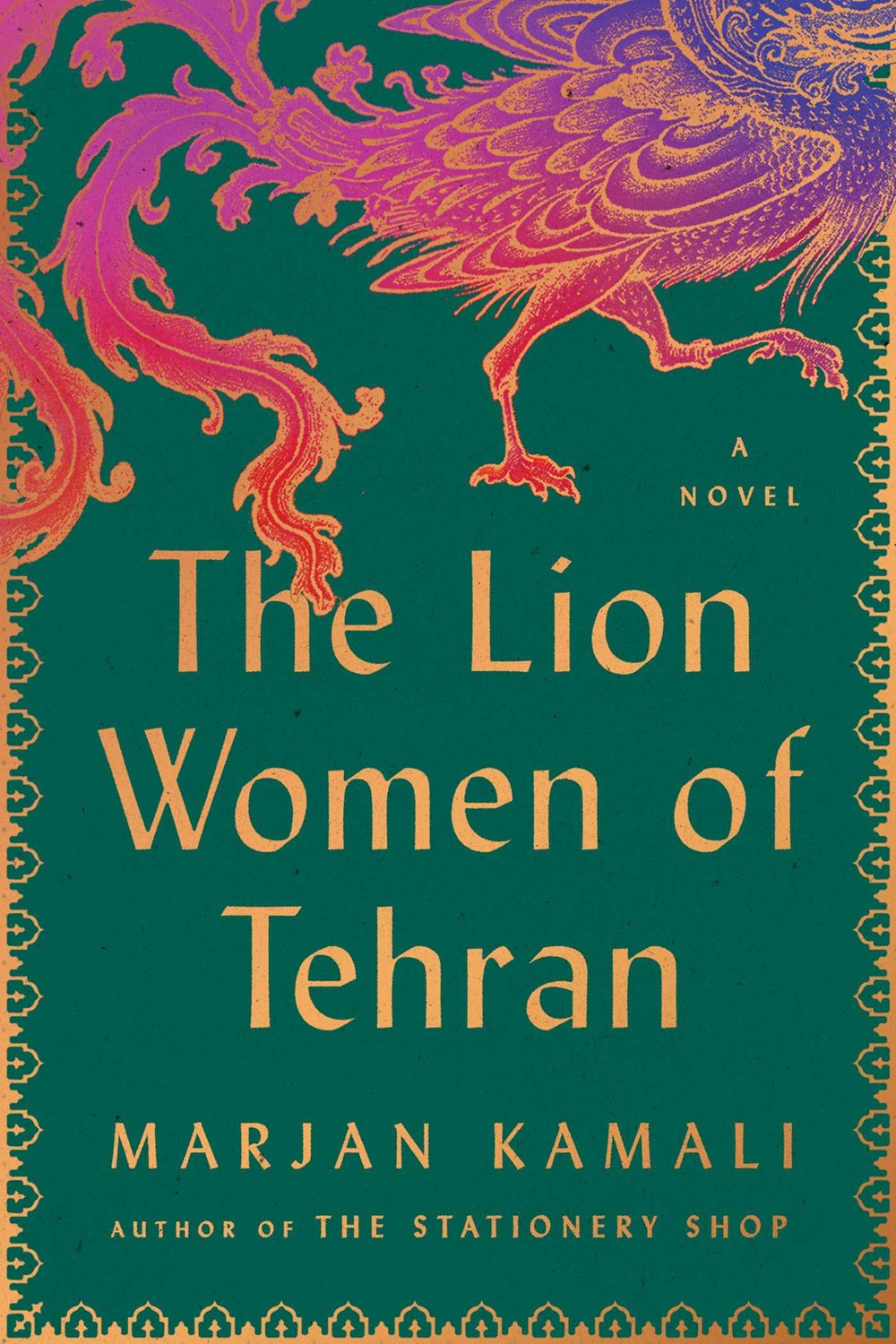
There were so many things to love about The Lion Women of Tehran (publication date July 2, 2024) by Marjan Kamali, including long-lasting female friendship, the historical setting in 1950s and 1960s Iran, and beautiful writing.
I was immediately enthralled by the story of 7-year old Ellie (Elaheh), the only child of a widowed mother, who has to move to a new neighborhood after her father dies, and meets Homa in school. Ellie’s mother is a snob, disliking the new neighborhood and children who play in the alleys, but Ellie and Homa become fast friends anyway, competing for the top of the class and having adventures. Ellie loves cooking with Homa’s mother at their house and spending time with their family. But when one of their adventures goes too far, Ellie’s mom marries her uncle and they move to a nicer neighborhood. They try to stay in touch, but it’s difficult when they don’t see each other at school.
Ellie and Homa meet again in high school, when Homa is accepted to Ellie’s prestigious girls’ school, and wins over all of her friends. Homa is political as always, working for the communists, who want to overthrow the Shah. Ellie has fallen in love with a good man, Mehrdad, and they’re all planning to go to college together. But Ellie has her first alcohol at a party, and says things to the wrong person that result in Homa being jailed. She knows it’s her fault, but she doesn’t know how to fix it.
When Homa returns from jail, 6 months pregnant and newly married to another friend who has rescued her from the impossible life of an unwed mother in 1960s Iran, Homa tries to rekindle their friendship and apologize, but Homa wants nothing to do with her. Ellie knows she deserves it.
Eventually, in the late 1970s, Ellie and Mehrdad, who were never able to have children of their own, move to the United States for Mehrdad’s academic work, and also because things in Iran are getting more heated. It’s the time of the American hostages and the Shah being deposed, and the Ayatollah Khomeini being put into power. A few years later, Homa reaches out to Ellie in New York City–can she and Mehrdad share their place with her daughter, Bahar, to get out of Iran and finish high school in the U.S.? The fundamentalists are making it especially difficult for young women, who are subject to severe punishment if even a strand of hair is visible from beneath their veils and Homa is so worried.
The only criticism I have is some anti-fat bias. Ellie notes that her mother doesn’t want her to be “too fat” and that she considered herself chubby. Homa’s nickname for Ellie even refers to her loving to eat, which Ellie didn’t mind, thinking that “Homa accepted my chubbiness as a fact and not as a vice.” These instances are not frequent, no more than 3-4 times through the entire book, but I don’t think they were really necessary.
Nevertheless, I still really enjoyed The Lion Women of Tehran and recommend it for fans of historical fiction set in countries other than the United States.
 Reading While Fat
One thought on “The Lion Women of Tehran”