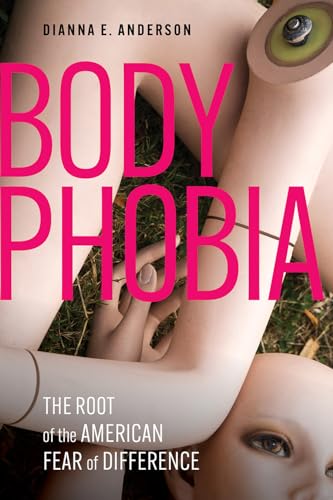
Body Phobia: The Western Roots of Our Fear of Difference (published September 17, 2024) by Dianna E. Anderson is, in many ways, exactly what the title says it is–a book about how, in 2024, so much of what is wrong with our world today can be traced back to the times when people only saw and experienced people who were similar to themselves. But it is so much more than that–Anderson, who is a nonbinary, queer, white writer with an evangelical history, dedicates each chapter of the book to a different aspect of our bodies and includes many of their experiences in their own body as well.
They pack a lot into the 127 pages of this book–from how many religions teach us that our bodies are sinful and to be discarded for the glories of heaven–to feminist theory about how some bodies–those not the default–are “marked”–and disability theory as well.
They discuss their own experiences of medical anti-fat bias and the intersection of their own gender dysphoria and fatness. They touch on disability theory and the effects of racism on the body, although there are many books by black and brown authors that do a better job. I did like how Anderson found the commonality between all of these different fears of our bodies.
The best section, I think, is Anderson’s chapter on LGBT bodies, which is based on their own experience of growing up assigned female, the associated anxiety and dysphoria, and transitioning through hormones and surgery to nonbinary.
Transgender identity, in particular, offends the sensibility that what you are born as is the thing in which you must stay. The trans and queer body being allowed to exist, being accepted, demonstrates the lie of safe and secure and set for what it is; if it is possible that God created me to be non-binary and queer and I can co-create myself, then the rules we all have been following, the things we believe to be capital-T Truth, might not actually be true. It would mean that our bodies are not destiny. To both the conservative Christian and the anti-trans feminist, the body is a rule, instructions to be followed throughout one’s life. Regardless of who you grow to be, your body is a set of instructions that are built into who you are— and changing your body is out of the question, ever.
Finally, Anderson writes about how capitalism uses and discards our bodies, and how our fear of death in Western culture correlates with the fear of our bodies.
Although they have taken up many themes with Body Phobia, I think Anderson has done a good job of making these themes accessible and in showing how all of these issues are all rooted in fear.
Thanks to NetGalley for a free e-ARC in exchange for an honest review.
 Reading While Fat
One thought on “Body Phobia: The Western Roots of Our Fear of Difference”