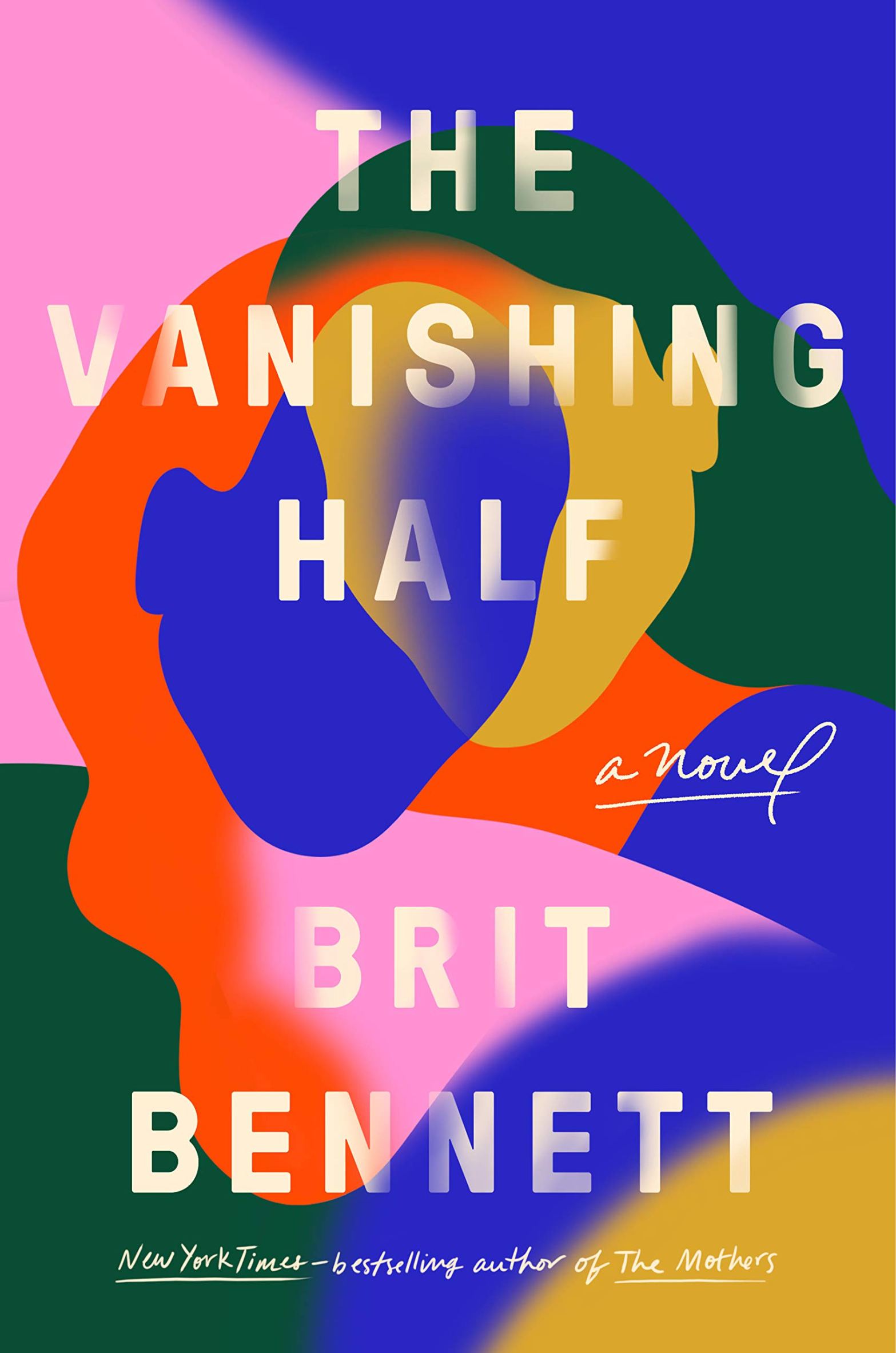
I’m late to The Vanishing Half (2020) by Brit Bennett, which was deservedly named a best book of the year by many popular news outlets, and was one of Barack Obama’s favorite books of the year.
Beginning in 1968, when one of the “lost twins” of Mallard, Louisiana, returns after having run away at 16 in the mid-1950s, Desiree Vignes has returned with her 7-year old daughter, Jude. Desiree and her sister, Stella, had escaped to New Orleans when their mother had them start working at 16, but Stella had a burning desire to finish school, and Desiree just wanted to get away. After a little while, Stella just doesn’t come back to her and Desiree’s apartment, and Desiree moves to DC to work for the FBI analyzing fingerprints.
Mallard is a “colorstruck” town, almost entirely populated by very light-skinned African American people, conceived by its founder in 1848 as a “town for men like him, who would never be accepted as white, but refused to be treated like Negroes.” When Desiree returns to Mallard, not only is her return the talk of the town, but her daughter, Jude, causes much talk because she is very dark-skinned.
Desiree meets an old friend, Early, who agrees to help her find Stella in between the jobs he takes as a private investigator. And soon the story jumps ahead 10 years to when Jude graduates from high school and moves away to attend UCLA on a track scholarship. Life in LA is so different than in Mallard, and Jude quickly meets Reese, who has escaped small-town Arkansas for the big city as well.
Going back and forth in time, I think it might be difficult to listen to the book without being able to go back and forth to check things, but soon we find what happened to Stella and how she made the choice to pass as white so she could get a better job, as a secretary in a department store, which she would not have been able to get in the 1950s if she had applied as a black woman. She falls in love with her boss, never telling him the truth, instead telling him she had no family. They marry and move to Connecticut, where they have one daughter, Kennedy, and they eventually move to LA.
What happens when Stella’s and Desiree’s daughters meet? It’s a compelling read about the different choices two people raised together, with the same early experiences, can make. Will they ever be as close as they were as girls? Were they ever really close?
It’s so compelling, with beautiful language and observations, like these:
You could never quite get used to loneliness; every time she thought she had, she sank further into it.
****
She never felt darker than when she was running, and at the same time, she never felt less black, less anything.
The Vanishing Half was also completely weight-neutral. There were few body descriptions, except for skin color and shade, and no negative descriptions of fatness or the opposite.
 Reading While Fat
One thought on “The Vanishing Half”