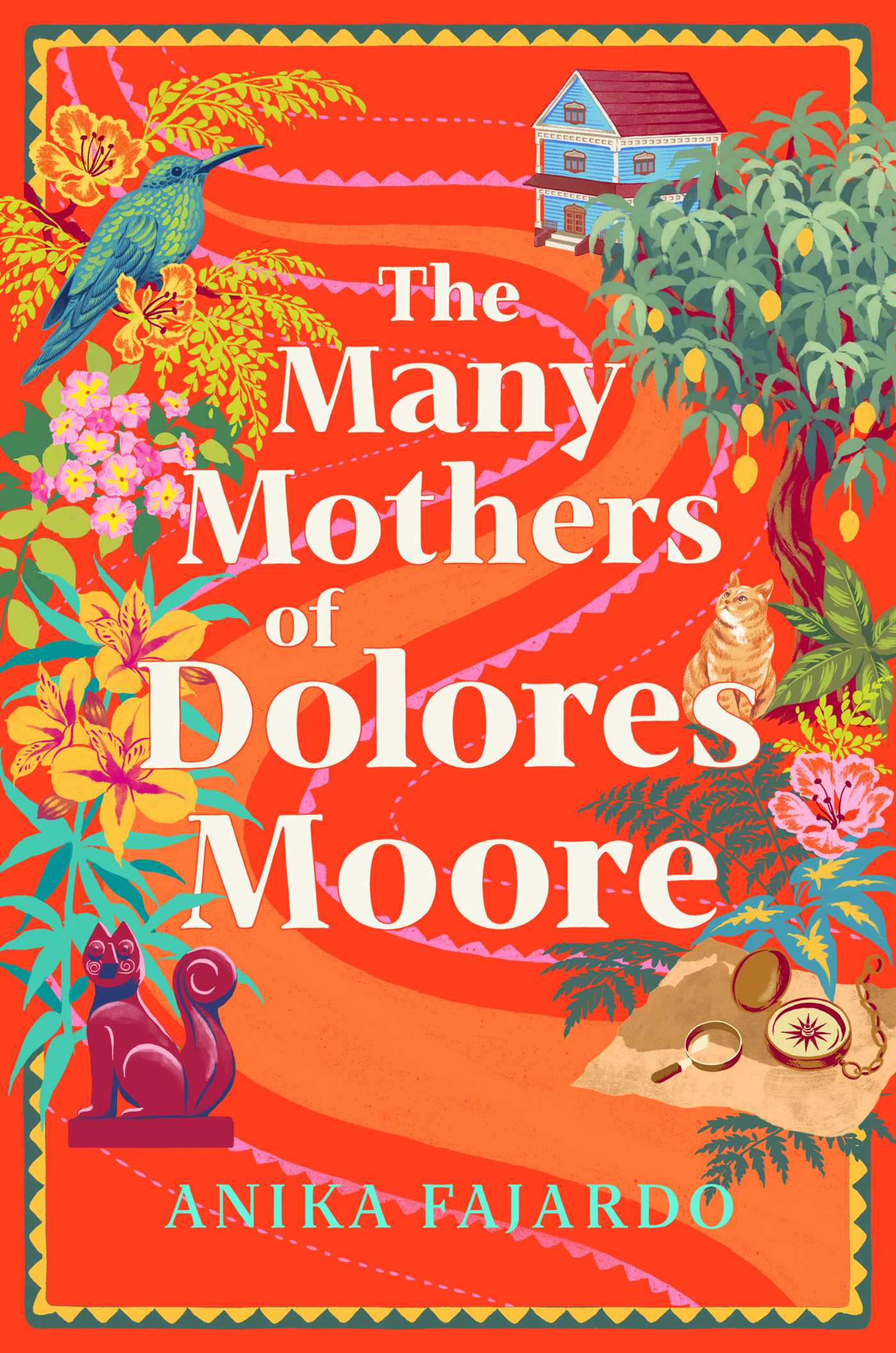
I really loved The Many Mothers of Dolores Moore (publication day September 16, 2025), Anika Fajardo’s debut novel! Though the theme of grief after losing one’s last living parent was difficult, I loved how Fajardo used magical realism with Dorrie’s ancestors a constant chorus in her head, the interludes about mapmaking, and chapters from the perspectives of other characters to weave this story together.
As the book opens, Dorrie is dealing with the death of her last living parent, her biological aunt, as her birth father died before she was born and birth mother when she was only a few weeks old, and Dorrie was adopted by her aunt and partner, who became her Mama and Mommy. Set primarily in the Minneapolis area, Dorrie has been able to hear the voices of her deceased female relatives since she was a child. Her father was Colombian, and she doesn’t know anything about how her mother, Margaret Moore, ended up in Colombia or about her father at all. She has gone to graduate school in Geography but had otherwise stayed in Minnesota, unlike her globetrotting mother, who traveled the world before she turned twenty.
As a result of a panic attack, her college boyfriend, Franklin, comes to her house as the EMT. Afterwards, Dorrie finds a map of Cali, Colombia, and is trying to figure out whether she’s going to honor her mother’s last wish for her to go to Colombia when Franklin stops by to check on her. In her grief, they hook up, but decide afterwards that they’re better off as friends, as he’s on a break with an on and off girlfriend for several years.
Meanwhile, chapters from Margaret Moore’s perspective alternate, where she has just moved to Cali to be with her love, Juan Carlos, though she doesn’t know Spanish and he has to leave her for a few days at a time to assist with his family’s business in Bogota.
Dorrie decides to go to Cali on her own, where she has to deal with lost luggage, but she falls in with an American woman married to a Colombian man and their friends and begins to explore the area shown on the map her birth mother had drawn. As Dorrie explores the area and meets someone who knew her birth mother, she explores a possible romance in Colombia as well, while Franklin is cat-sitting for her mothers’ cats. Meanwhile, the chorus of voices is still with her, providing commentary on everything she sees and does.
I loved the journey Dorrie took, both to Colombia and back to herself after losing so much. There was some anti-fatness several places– in the description of a random woman, in one of her ancestor’s pride in maintaining her shape, and in the author’s description of Dorrie as “sturdy” as if that’s a negative description. The author could have done a bit better by changing those things during the editing process to purge any anti-fat bias at all, because otherwise, the book was lovely.
 Reading While Fat
One thought on “The Many Mothers of Dolores Moore”