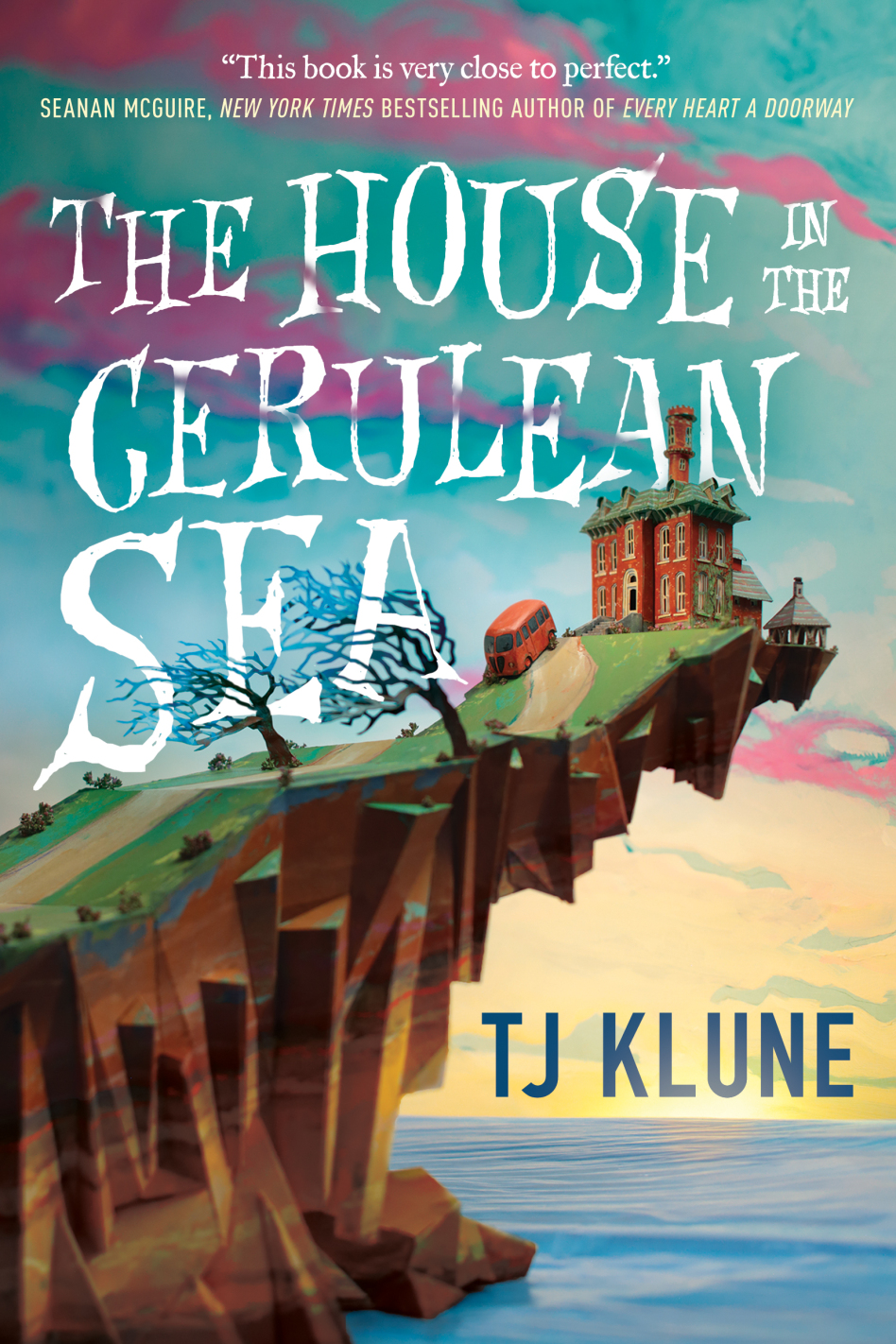
I’m a little disappointed with myself for waiting so long to read the bestselling The House in the Cerulean Sea (2020) by T.J. Klune, which was everywhere since then and nominated for many fantasy awards, but I do have a bit of a contrarian in me and sometimes resist books that become very popular.
If you haven’t yet read it, and like heartwarming fantasy involving a fight against a big bureaucracy, featuring quirky characters and magical children, don’t be stubborn like I was and just give in to it.
Forty year old Linus Baker is a caseworker in the Department In Charge of Magical Youth (DICOMY) and inspects orphanages to ensure that the children placed there are properly cared for. He keeps himself carefully neutral, following the Department’s Rules and Regulations, and doesn’t think about the consequences of his reports. He takes things very seriously, as outside of work all he has is a small flat and his cat, Calliope.
When the higher-ups call him up for a very special assignment, Linus goes to Marsyas Island with Calliope to visit an orphanage run by Arthur Parnassus, that houses six very special children. With help from Zoe, the unregistered local island sprite who is the caretaker of the island, Arthur welcomes Linus into his home, as there’s no other place to stay on the island.
The children include Chauncey, an almost indescribable boy who wants to be a bellhop; Talia, a female gnome, beard and all; Theodore, a wyvern; Phee, a forest sprite, Sal, a teenage boy who turns into a Pomeranian when he gets frightened, and Lucy, short for Lucifer, a 6 year old boy who is the son of the devil and in his file is labeled the Antichrist.
When Linus finally reads the files he’s been given, he’s amazed by what these six children have survived, and as he observes how Arthur runs the house and joins in many of their activities, he loses much of the fear that being around “these kind” of children typically produces.
I don’t want to give too much away, but it was so beautifully-written and about found family, overcoming prejudices, and falling in love. Also standing up for what you believe in–my favorite quote:
We are who we are not because of our birthrights, but because of what we choose to do in this life. It cannot be boiled down to black and white. Not when there is so much in between. You cannot say something is moral or immoral without understanding the nuances behind it.
There are some descriptions of Arthur’s size–at the beginning, he is somewhat embarrassed by the size of his stomach, but by the end of the book he’s much more comfortable in his own skin. Talia describes him as “round, like me” in a neutral way, so I think it’s mixed anti-fat and fat positive.
If you haven’t yet read it, please do. It’s a great escape with interesting characters doing good things for the world they inhabit.
 Reading While Fat