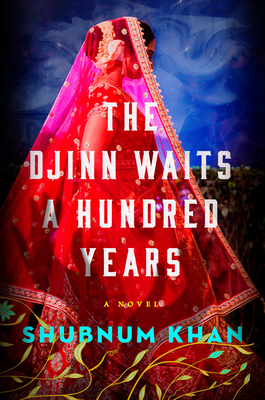
The Djinn Waits a Hundred Years (2024) is Shubnum Khan’s first novel published in the U.S., but she also has published an earlier novel and a memoir. Set along the coast of South Africa among the Muslim Indian community there, The Djinn Waits a Hundred Years is delicious, heartbreaking, gothic historical literary fiction that has a recent timeline (2014) and a historical one (1930s).
The current timeline follows 15-year old Sana and her father, who have just moved to a crumbling old mansion along the coast of Durban to live in one of the apartments the mansion has been turned into. They are both still grieving the loss of Sana’s mother to cancer, and move there for a “fresh start” in the house, Akbar Manzil, along the water, that has many secrets and where an interesting cast of mostly elderly characters live.
The historical timeline starts with an adventuring man, Akbar Ali Khan, who has traveled to Africa with his new wife on their honeymoon in the 1920s and declared that they will live in Durban, which he is smitten with, even opening up his own sugar mill. He builds a palace, merging Western and Eastern ideas, and developing a garden where he can bring animals from all over the world. His mother comes to live with him and his wife as they have their first child. and then a second.
Sana wanders through the house exploring rooms that have been closed for years–she is fascinated by love and asks her neighbors about it. The one they call Doctor is kind of the manager–he is retired from the military, and has lost one leg but he tries to keep the peace among the bickering. There is Razia Bibi who feuds with Fancy, a neighbor with a parrot, for reasons Sana cannot comprehend. Zuleikha teaches piano and spends a lot of time in her room. And no one knows that Sana’s dead sister has followed her there–Sana and her sister had been conjoined twins who were separated, and her sister died but continues to haunt her, telling her horrible lies and wanting Sana to join her. But Sana finds a hidden room with treasures like photos and even a diary and a hidden attic room only accessible with a ladder.
And back in 1932, Akbar shocks the house by coming home one day and declaring that he is taking a second wife, a worker at the factory named Meena, who had migrated with her parents from South India, where they had worked on a cotton farm. She doesn’t want to marry, but her parents essentially force her to, and when she comes to Akbar Manzil, she is not welcomed. But Akbar doesn’t force himself on her. She tries to learn English and keeps to herself, but he visits her every night to read the newspaper in her presence, and eventually she falls for him.
It’s an enthralling story, beautifully written. There is a Djinn, but it’s not mischievous, mostly watchful and grieving, as it had followed Meena to the house. I loved the characters, with the exception of the couple of truly horrible people, and while there were some descriptions of body size, the descriptions were generally neutral. I highly recommend it!

